Over 1000 types of belts available immediately

As a leading manufacturer and supplier of industrial belts, we offer a wide range of reliable solutions for the most diverse applications. Our belts combine top-tier durability, precision, and energy efficiency, ensuring optimal performance in all industrial environments.

✔ Manufactured from premium materials (rubber, polyurethane, thermoplastic polymers)
✔ Tested under extreme conditions – a guarantee of long-term durability
✔ Immediately available from stock – fast delivery without waiting
✔ Technical support – assistance in selecting the ideal solution

OVER 1000 BELTS IN STOCK – READY TO SHIP!
Can’t find what you need? Our global manufacturer network ensures fast delivery on any specialty belt.

Flat Belts

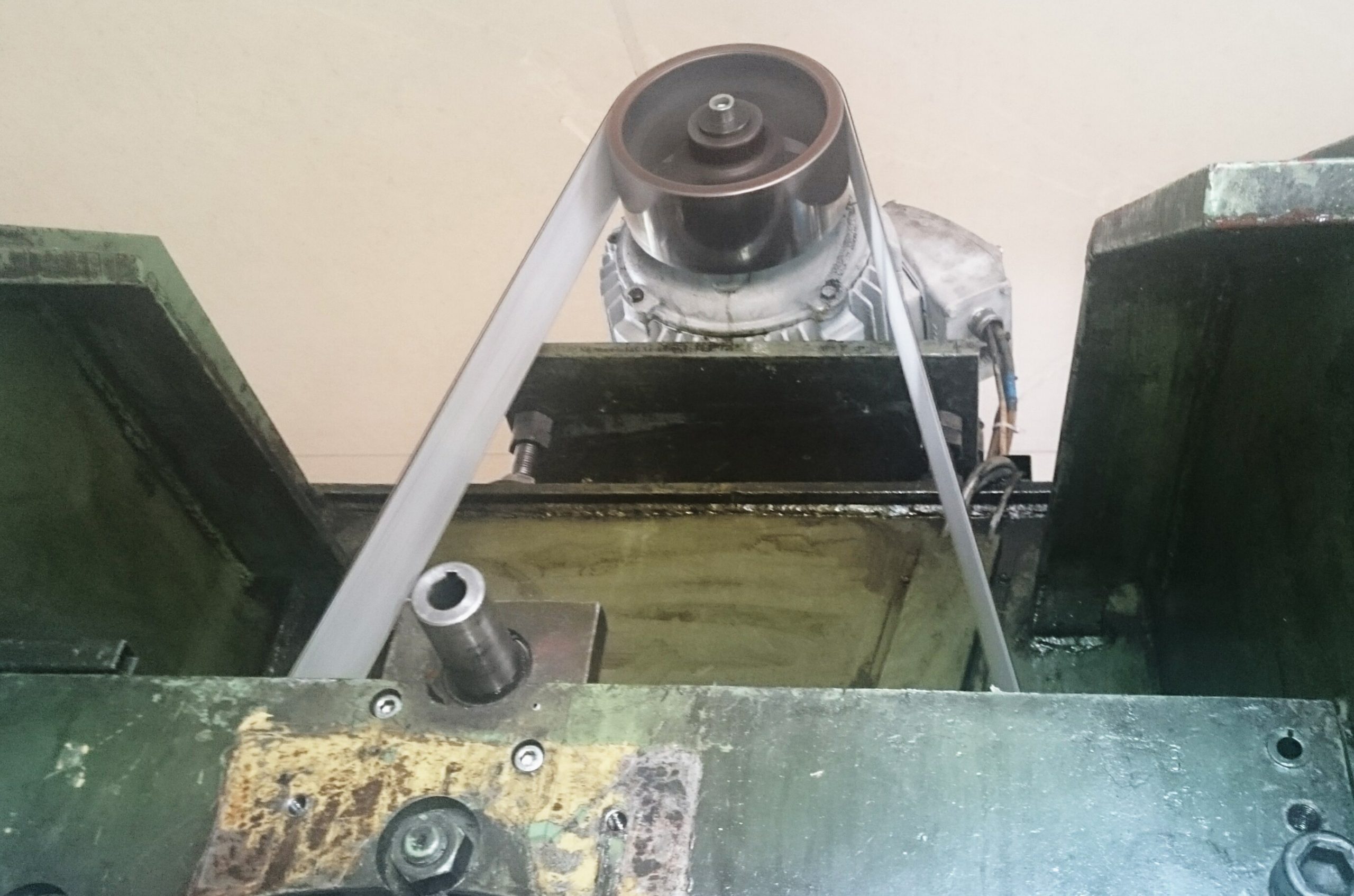
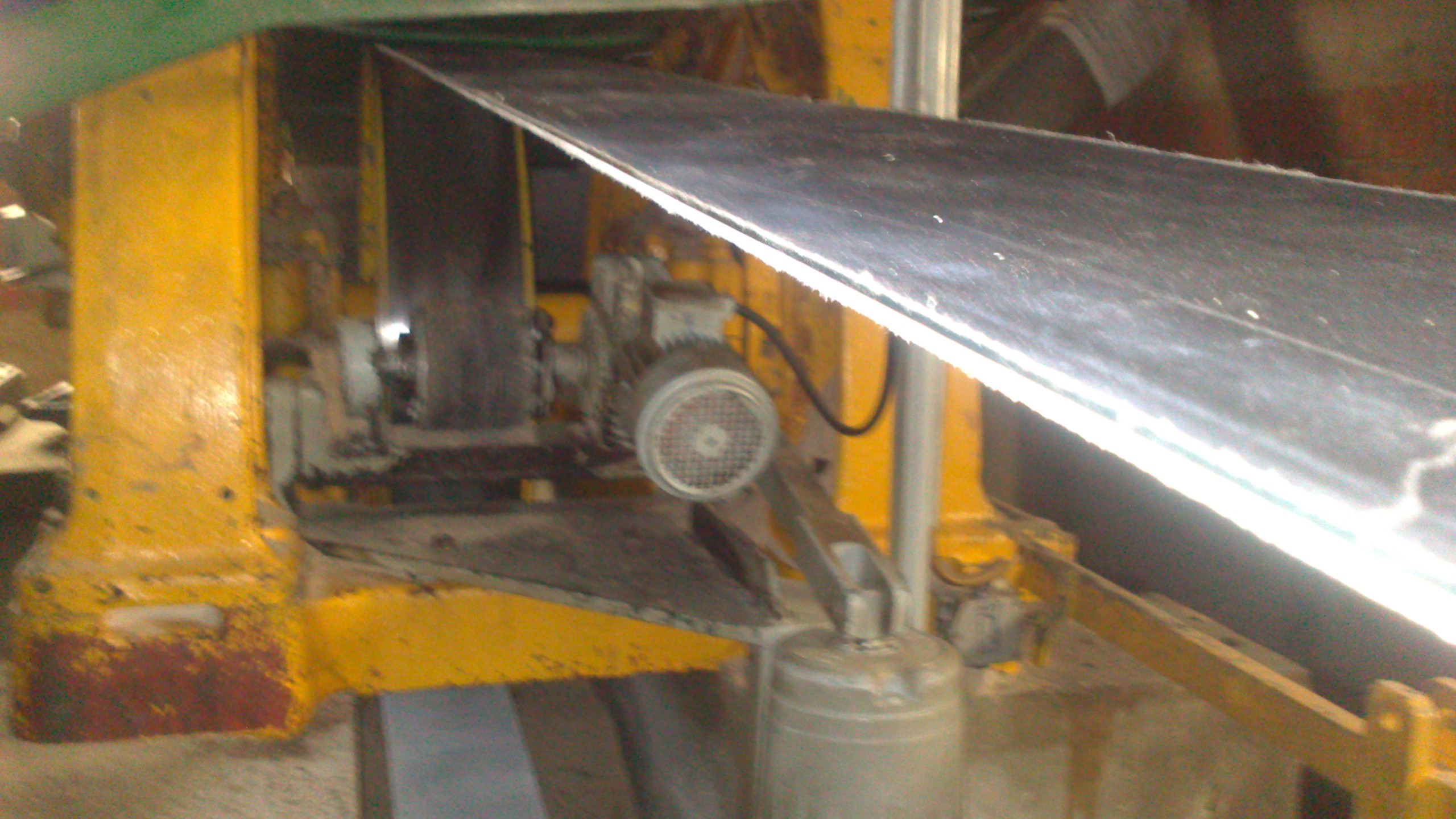
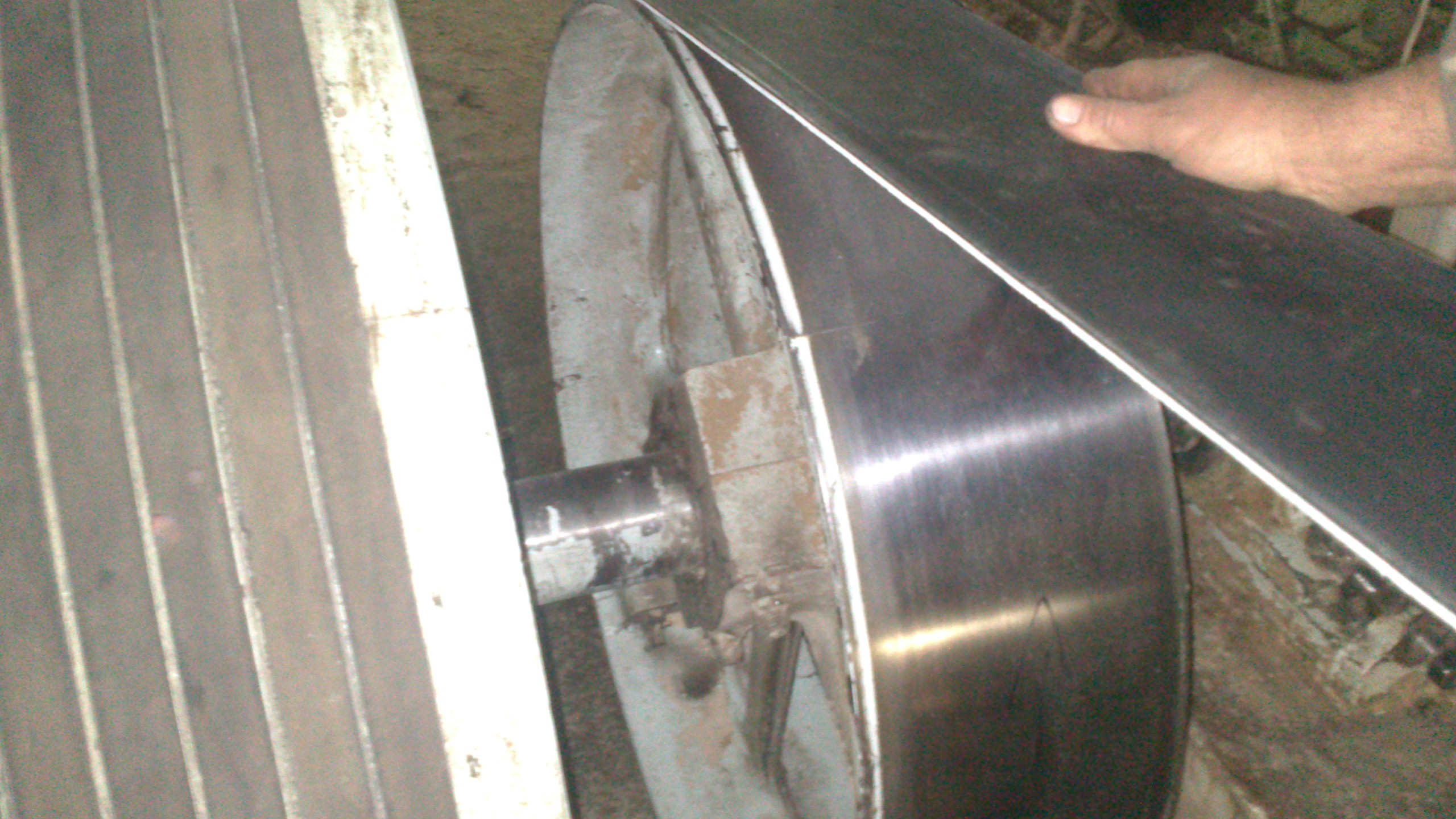
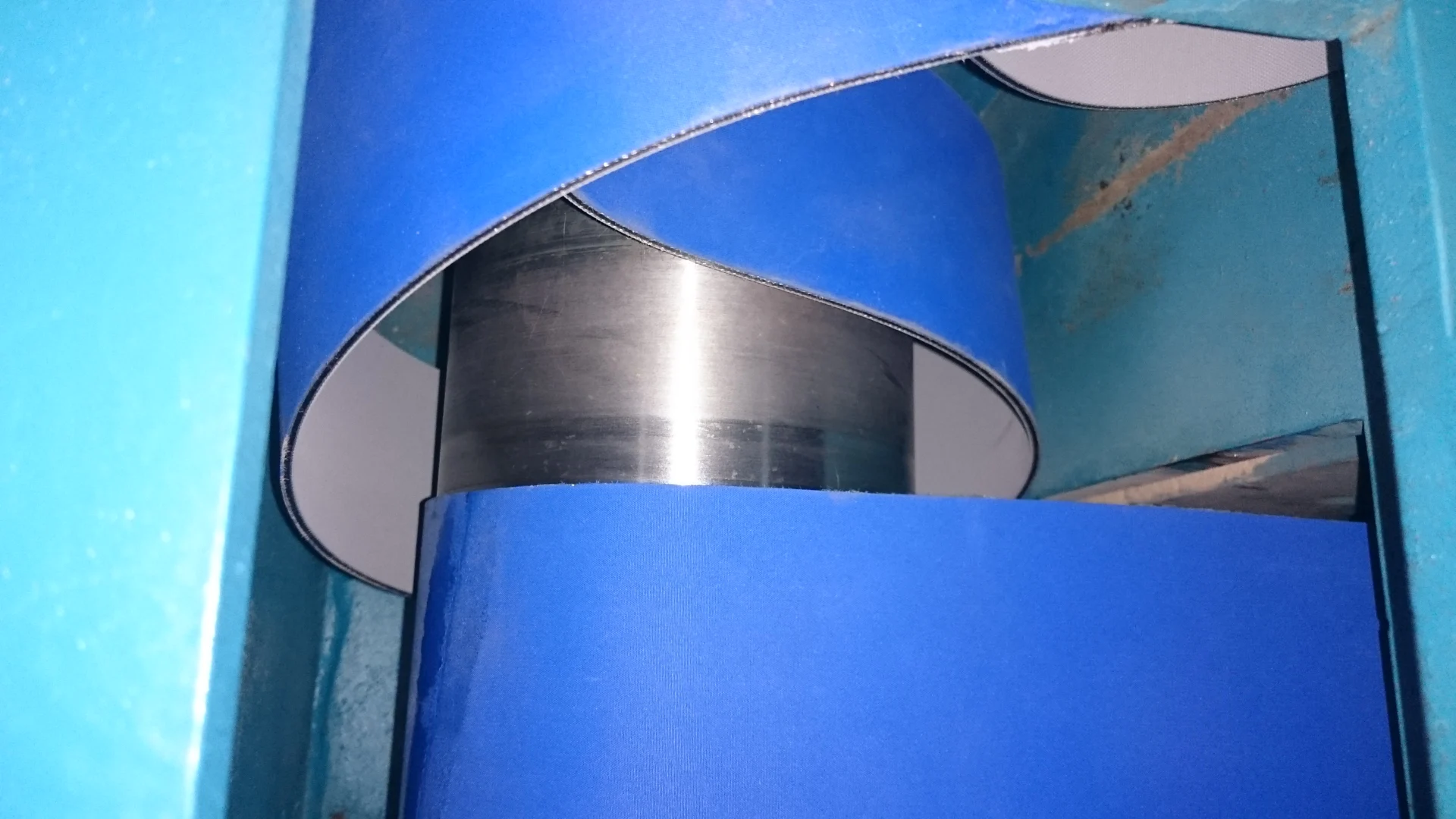
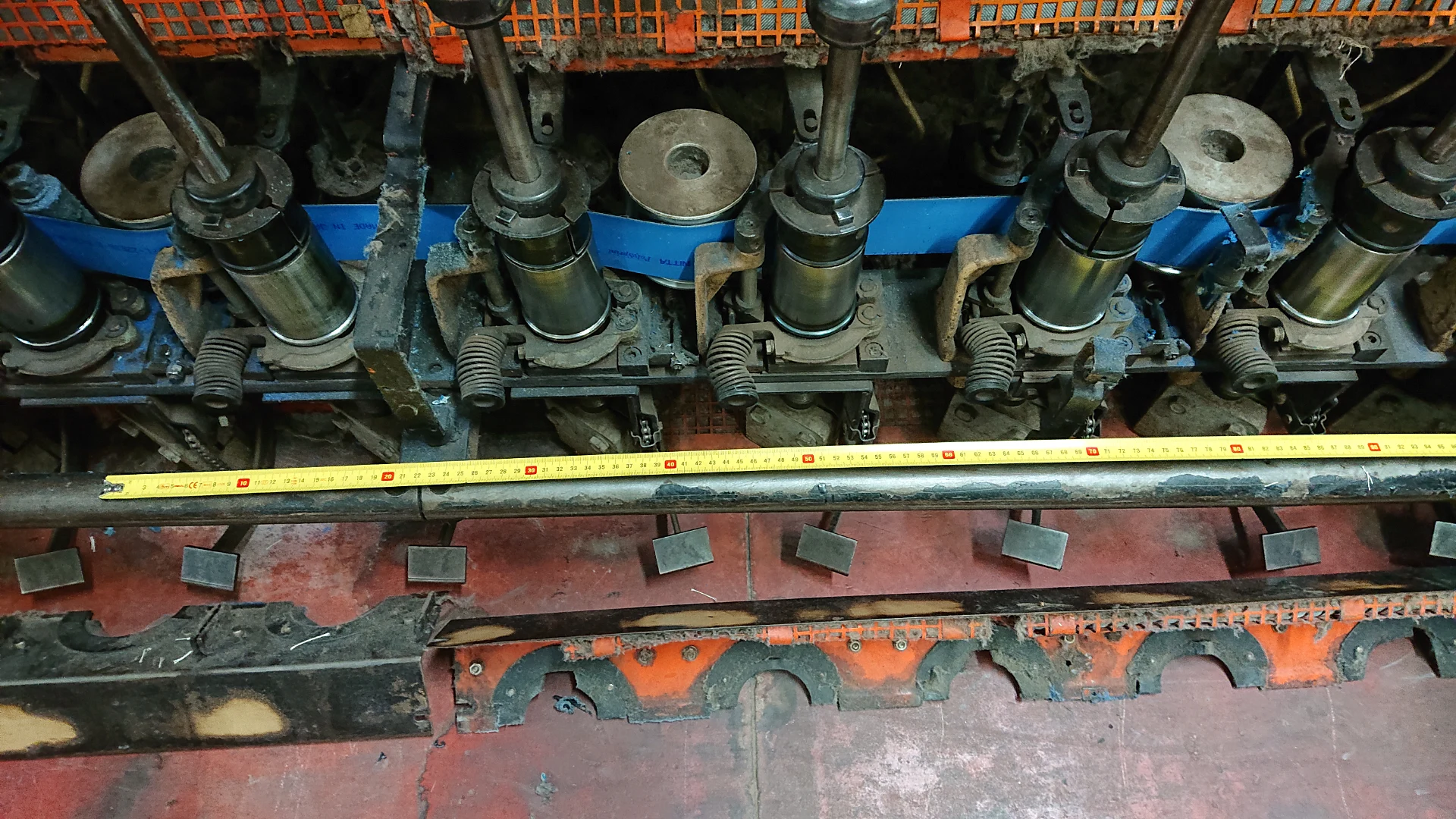
Flat Belts are power transmission belts made from rubber, synthetic materials, canvas, or leather. They are used in industrial equipment and conveyor systems for torque transmission. Thanks to their design, they have excellent grip, making them ideal for high-speed drives. Furthermore, they are flexible (suitable for small pulley diameters) and extremely efficient (above 99%).

Rubber Flat Belts
Initially, they replaced leather belts due to problems with stretching and splicing, but later lost their primacy due to demanding production. Today, modern flat belts feature improved elasticity and superior grip, making them crucial for demanding high-speed drives. Compared to V-belts, they are more efficient, experience less wear, and are more versatile in various industrial applications.

Composition of Flat Belts:

  • Composition of Flat Belts:
  • Top Layer (NBR rubber or leather)
  • Tensile Member (PA/polyamide or aramid fabric)
  • Protective Layer (impregnated canvas)
  • Flat Belt Designs:
  • Single-Sided with one working layer
  • Double-Sided with working layers on both sides for drives that require the use of both sides

They are available in various widths, lengths, and thicknesses for all types of applications.

MORE DETAILS

Timing Belts

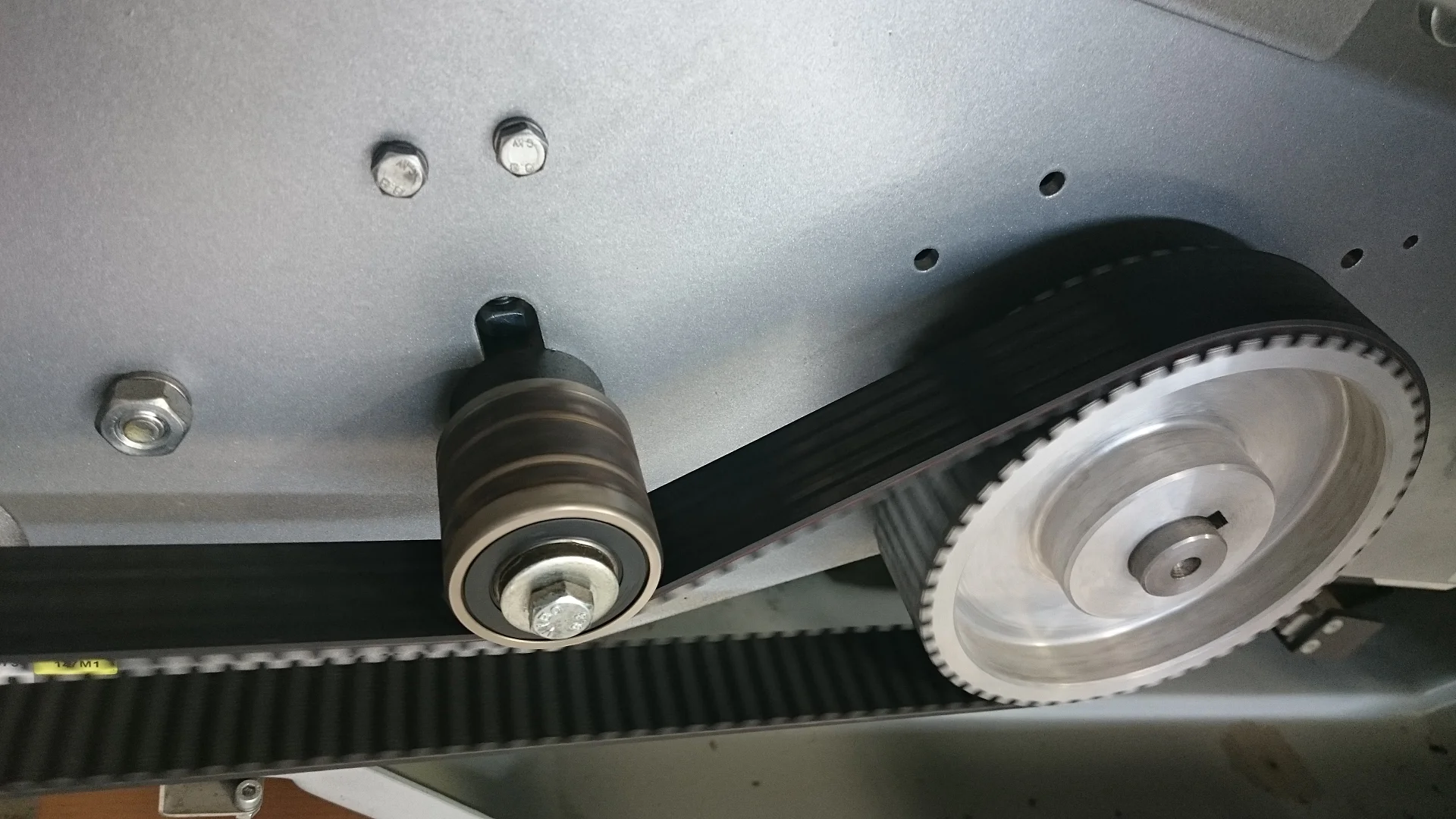
Timing Belts have teeth on their working surface, which ensures precise engagement and efficient power transmission. They are crucial for synchronizing mechanical components and maintaining the accurate performance of machinery.

Materials and Composition of Timing Belts:

  • Rubber (SBR rubber)
  • Polyurethane (PU)
  • Tensile Member: PES/polyester cord, steel cords, Kevlar

Tooth Profile

  • Trapezoidal
  • Curvilinear (e.g., HTD, STD)
  • Other specialized profiles

Classification of Timing Belts by Pitch
The pitch denotes the distance (in mm) from the top of one tooth to the top of the next. Timing belts are classified into:

  • Metric (pitch in mm)
  • Imperial (pitch in inches)

MORE DETAILS

V-Belts

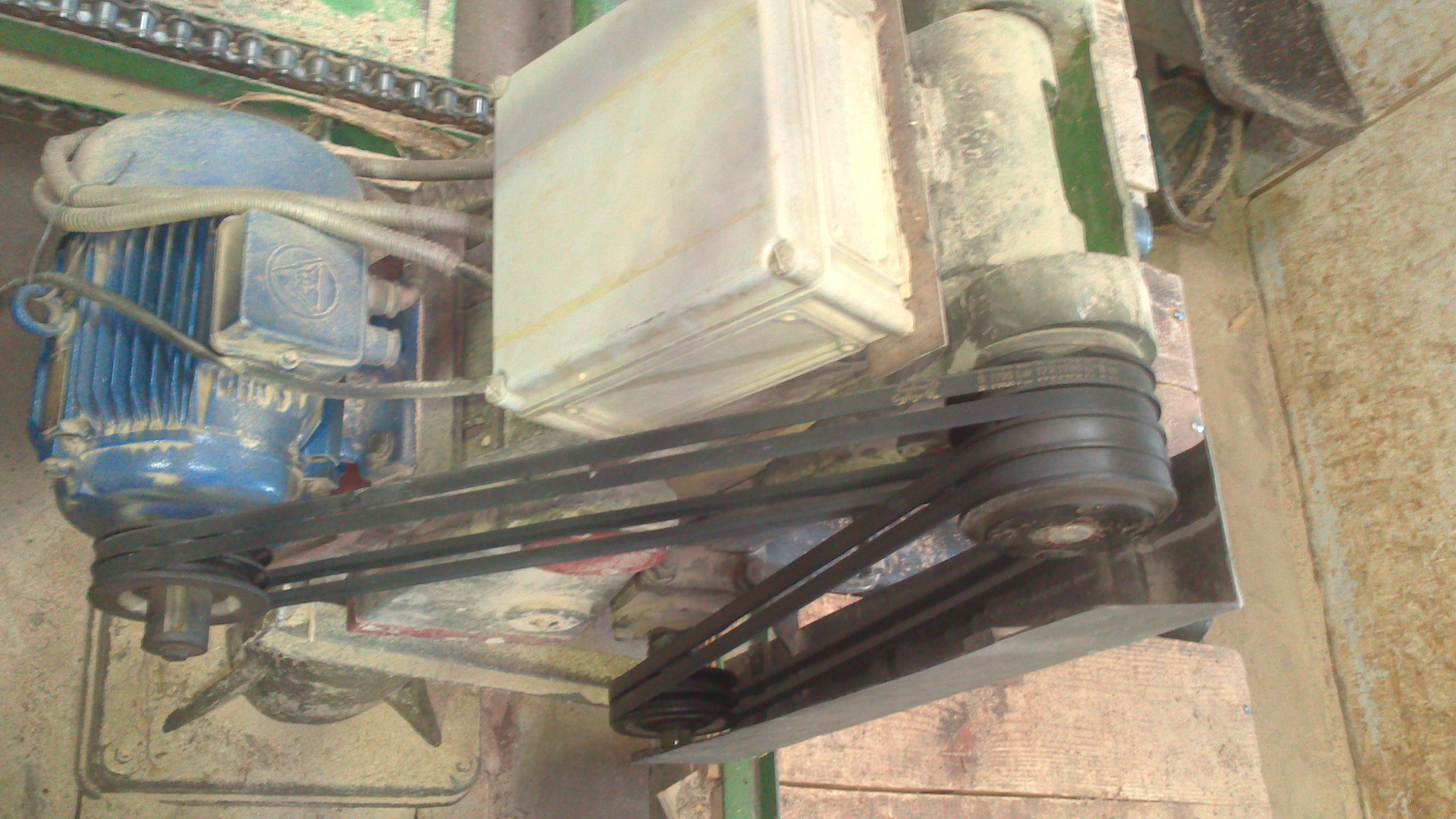
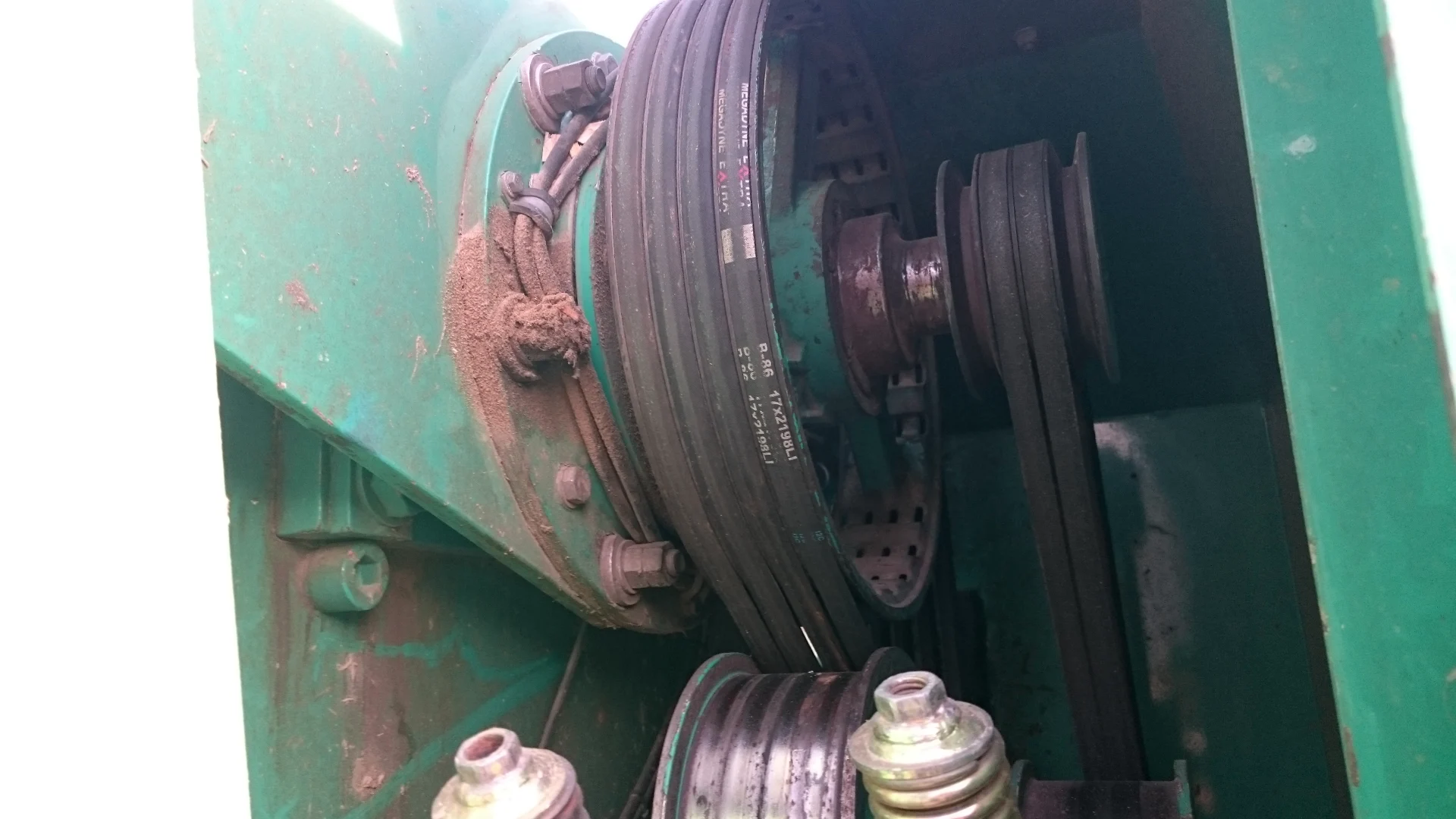
V-Belts have a trapezoidal cross-section, which prevents slippage and improves grip. Thanks to their “V” shape, the contact area with the pulleys is increased, making them ideal for transmitting higher torque.

Materials and Composition of V-Belts:

  • Reinforced Rubber (with PES/polyester cord)
  • Protective Cover (e.g., impregnated canvas for high temperatures or drives where controlled slippage is required)

MORE DETAILS

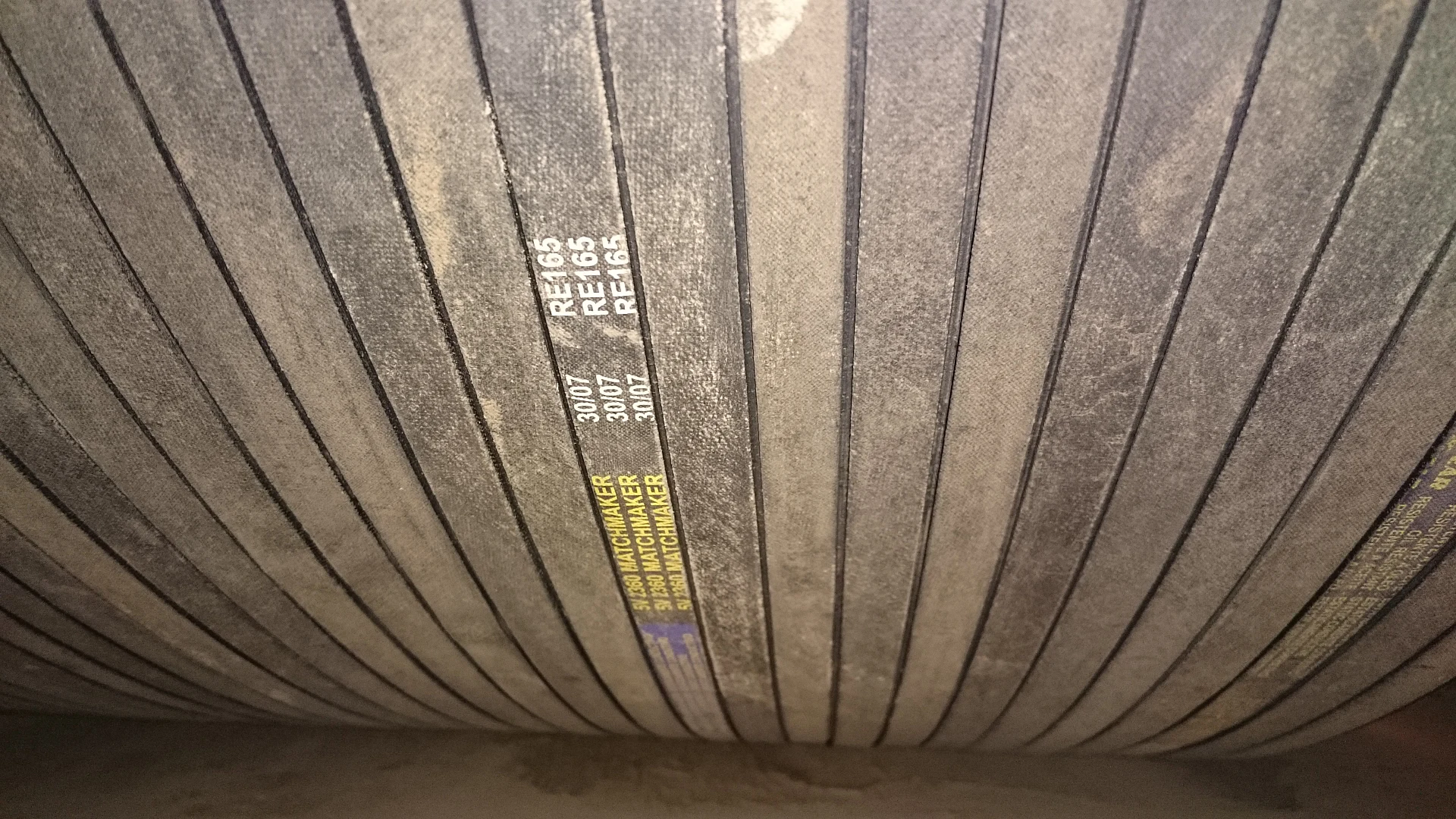
Multi-rib V-belt

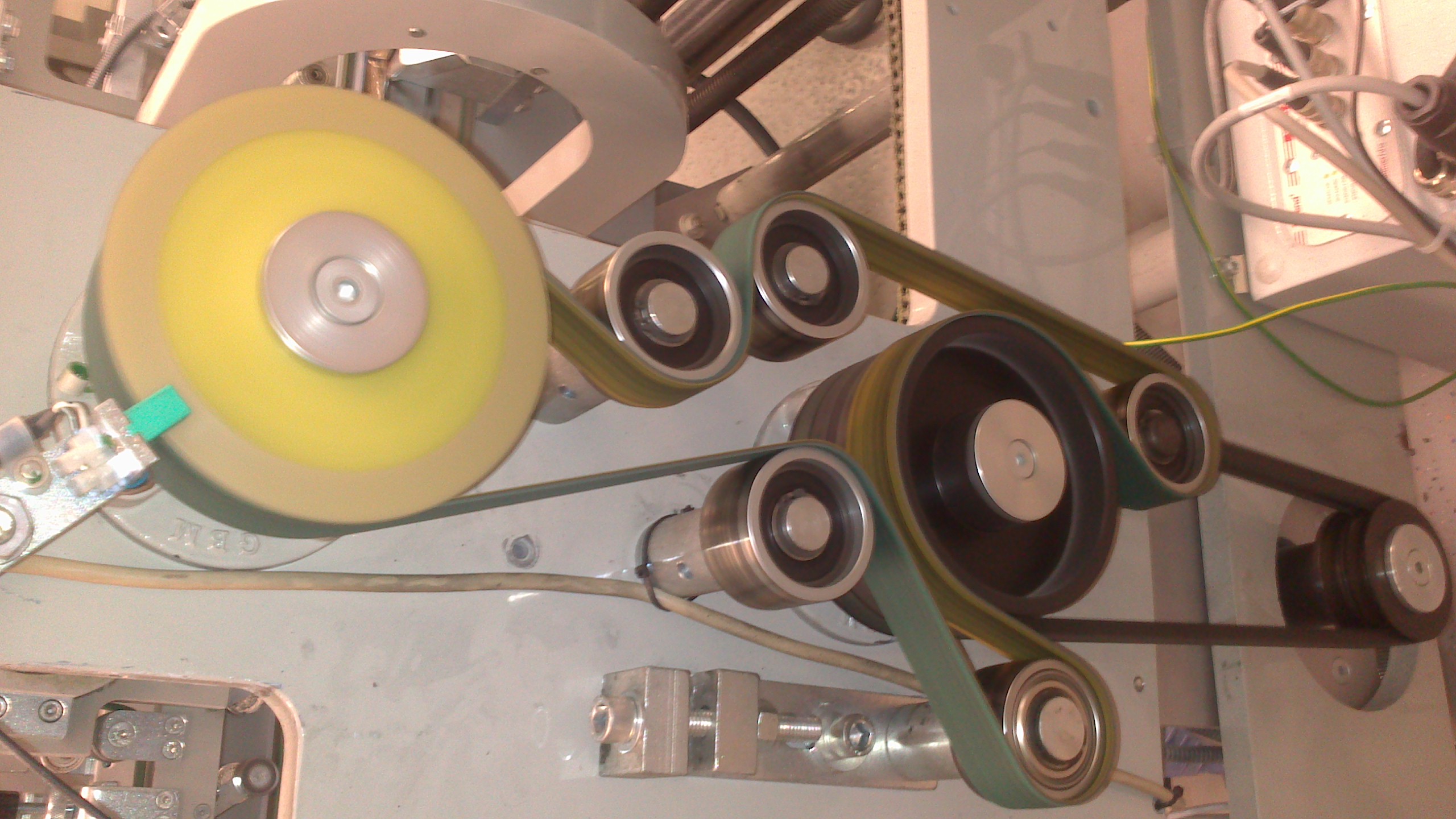
A multi-rib V-belt features multiple longitudinal ribs in a “V” shape, which ensures better grip and reduces belt slippage. The belt’s design is essentially a combination of a flat belt and a V-belt. This design allows for an even distribution of load, greater flexibility, and high transmission ratios.

Classification of POLY-V belts by pitch
The rib pitch is the distance (in mm) between the tops of two adjacent ribs.

MORE DETAILS

Variable Speed Belts

Variable Speed Belts possess antistatic properties according to the ISO 1813 standard for electrical conductivity. These belts are manufactured from a compound resistant to oils and greases, heat, ozone, sunlight, weathering, and aging. The operational temperature range for variable speed belts is from -30 degrees Celsius to 80 degrees Celsius.

MORE DETAILS

Additionally

POLYMAX belts:
These wide-angle V-belts with a 60° angle are used in high-speed machinery. Due to their compact construction and efficiency, they are high-quality belts that reduce vibration and offer high efficiency. They can be used as a single belt or with multiple belts running parallel on a pulley (3, 4, or 5 in parallel).

ADJUSTABLE V-BELTS:
Link-type V-belts: These belts, such as the “Power Twist” brand (typically red), are made from interconnected segments or links. The belt material is PU/polyurethane with a PES/polyester reinforcement, available in Z, A, B, or C cross-sections. The easily assembled and disassembled links allow for the creation of a belt of any length, leading to optimized spare parts inventory.

Perforated V-belts: These are made from a synthetic material with longitudinal perforations, typically green in color. The belt material is a green compound with PES/polyester reinforcement, in Z, A, B, or C cross-sections. The perforations allow all belt dimensions to be joined with metal connectors (straight and/or hinged), enabling the creation of a belt of any length. The key benefit is the optimization of spare parts inventory.

ROUND AND V-BELTS MADE FROM THERMOPLASTIC MATERIALS:
These are weldable belts made from PU/polyurethane of various hardness levels for different industrial applications.

They are used both as power transmission and conveyor elements. Typical industrial sectors include the food industry, logistics, paper and cardboard processing, printing, product packaging, building materials industry, low-power drives, and other industrial areas.

MORE DETAILS